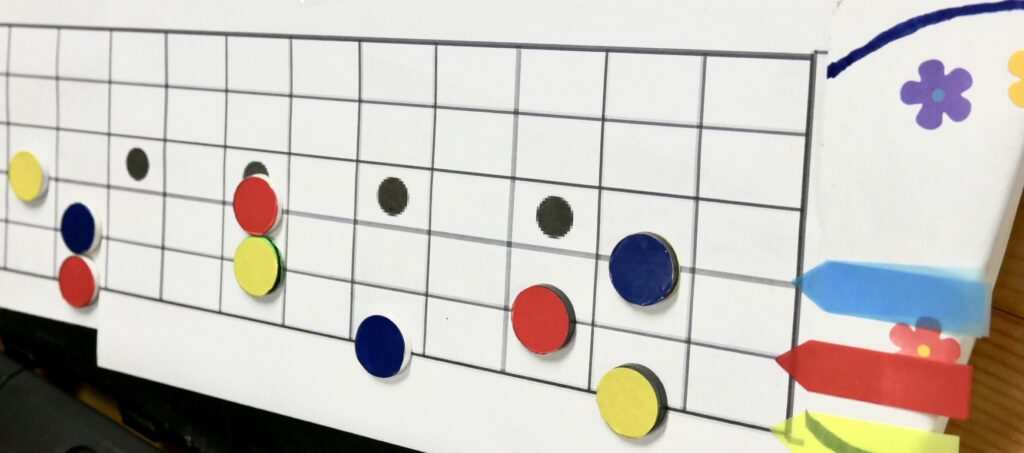
Spread triads are a great way to play more melodically on the guitar.
Spread triads also sound cool as chords and arpeggios when playing accompaniment on guitar. They even make harmony sound more harmonious. (more on that when we get to the post on the harmonic series)
What is a spread triad? A spread triad occurs when you take the middle note of a triad and move it up an octave.
Check out the video guitar lesson on spread triads.
Move the Middle note up
When we create a spread triad, we spread out the notes to a higher range. The middle note is moved up one octave. This can happen in many types of chords; major, minor, sus chords, 7ths, 9ths and beyond. Today we are just looking at major and minor chords to keep it simple.
Shapes to the rescue
By focusing on just 3 strings and playing with shapes, we can make it easy on ourselves. There is a shape for minor spread triads and a slightly different shape for major spread triads.
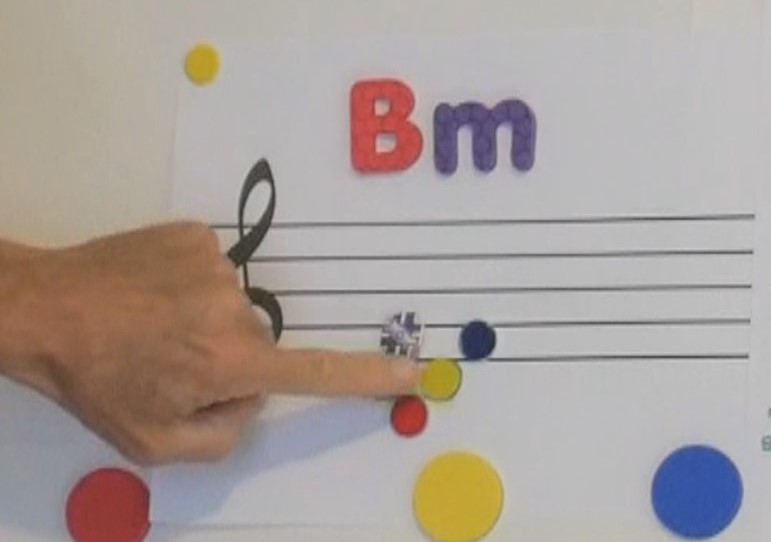
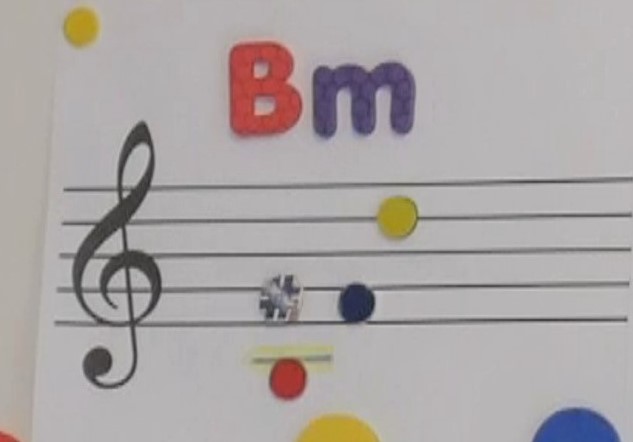
Bm Spread Triad
Here we show how to play minor spread triads on the guitar. This shape is extremely versatile.
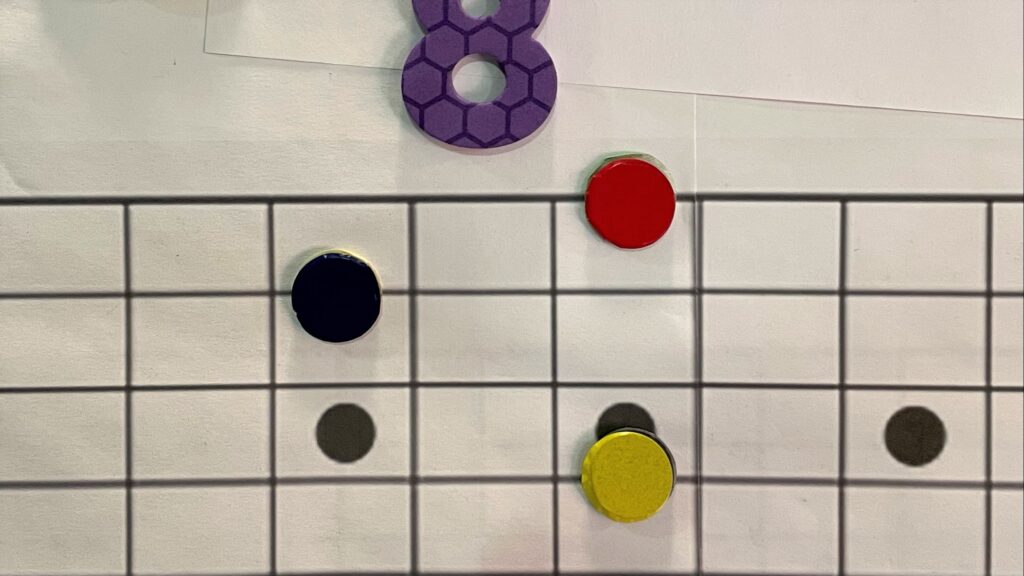
This is the shape of the Bm spread triad. You can move this shape anywhere up and down the neck of the guitar to achieve minor spread triads. For example, if you move it up just one fret, you have Cm spread triad. Aren’t shapes great on the guitar?
A Major Spread Triad
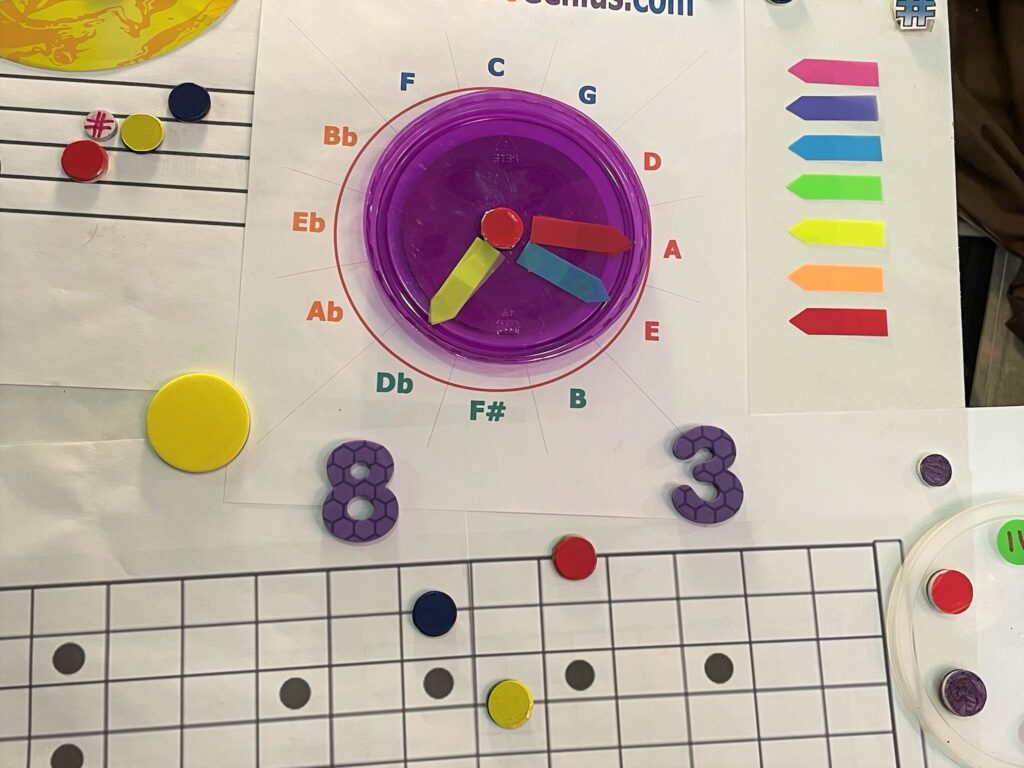
Above is the A major Spread triad. You can also see the notes on the musical staff A, C#, and E, as well as the circle of 5ths. Note that C# and Db are the same note, just different names. Move this shape up and down as well.
Below you can see this same shape moved back 2 frets on the guitar. This gives us a G major spread.
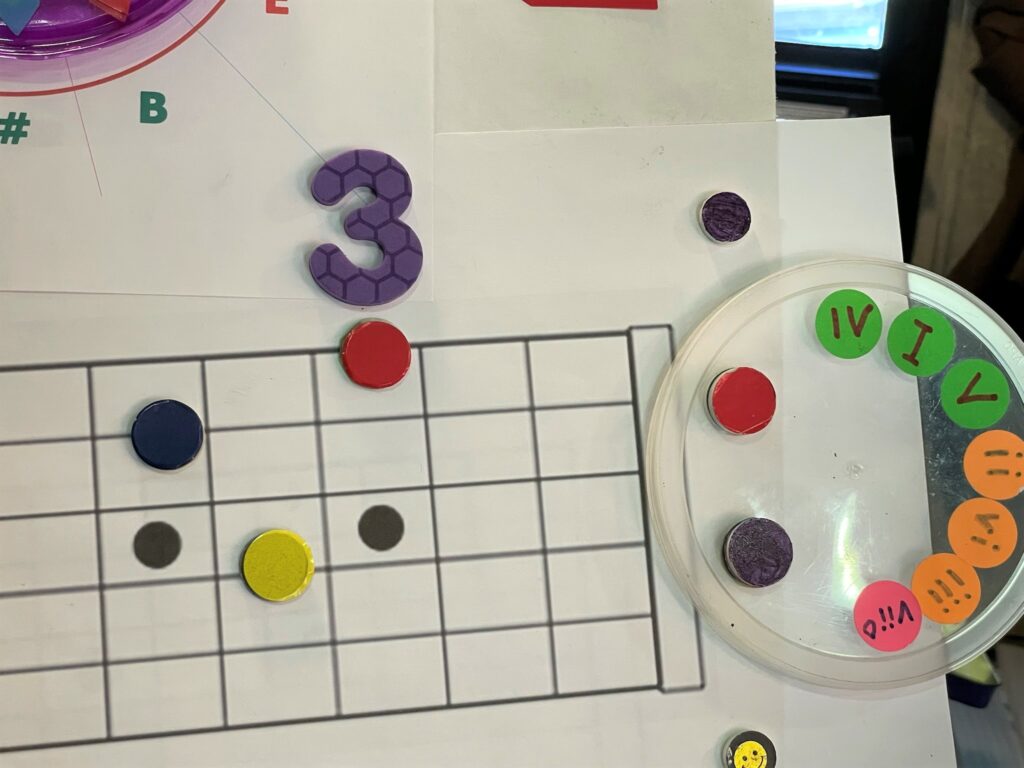
Experiment with playing the notes of these spread triads one at a time. This can lead to some wonderful melodic ideas.
They can also be played as arpeggios, of try playing the bass (lowest note) with your thumb and the other notes of the chord with you fingers.
Create some new music that invokes spread triads and post it here in the comment section for us to enjoy! Cheers