
Spice up your music creation skills. Just by adding even one or two chords from a parallel mode you can add uniqueness and variety to your music.
Tired of the same old chord progressions?
Today we’ll talk about the EASY way to spice up you tunes. Ready to make your music sound more interesting? Just do it.
Here we explore borrowing chords from a parallel mode and other ideas to liven up your music and add variety.
Exploring Modal Interchange and Creative Chord Progressions in Music
Hey there, music enthusiasts! Today, we’re diving into the fascinating world of modal interchange, Strap in for a fun and educational journey through chord progressions and musical experimentation!
We explore the concept of modal interchange, emphasizing that while some musicians delve deep into music theory, others simply play around with chords, creating something unique and interesting. This sets the stage for a lighthearted and accessible exploration of music theory.
Using an example from the Ultimate Fake Book, we highlight the use of modal interchange in classic songs, such as “I’ll Take Romance,” where key changes or modal shifts add variety and flavor to the music. By analyzing chord progressions, we can see how seemingly disparate chords like A♭7 and D♭maj7 can be incorporated into a piece while maintaining coherence.
But how can we apply these concepts to our own musical creations?
Below is the chord progression I created using modal interchange. It starts in the key of F major, then shifts briefly into F minor and back to F major again.
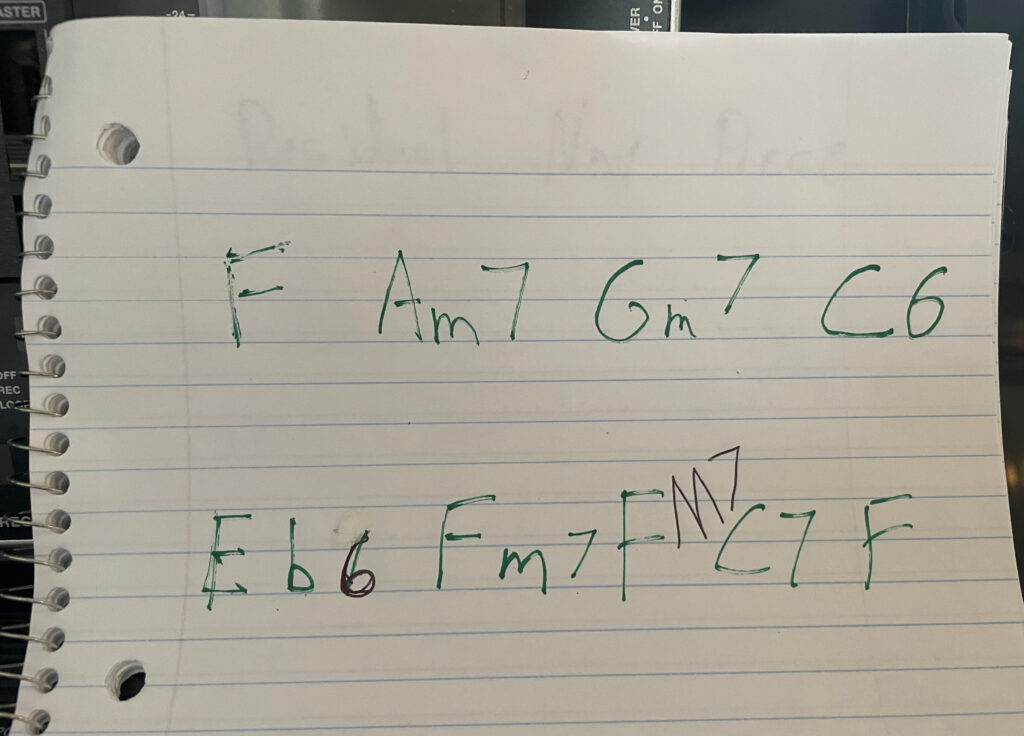
Here is a personal chord progression experiment. Starting in the key of F, they introduce chords like C6 and Fmaj7, establishing a familiar harmonic foundation. Then, by venturing into neighboring keys like A♭, we demonstrate how to borrow chords from different modes to add richness and diversity to compositions.
You could call it temporarily switching to the key of Ab, just for 2 chords. Then back to F major again.
Or you could call it borrowing from the parallel minor. In this case F minor, because we started in F major, grab the Eb6 and Fm7 chords from F minor – the parallel minor. And then jump back to F major.
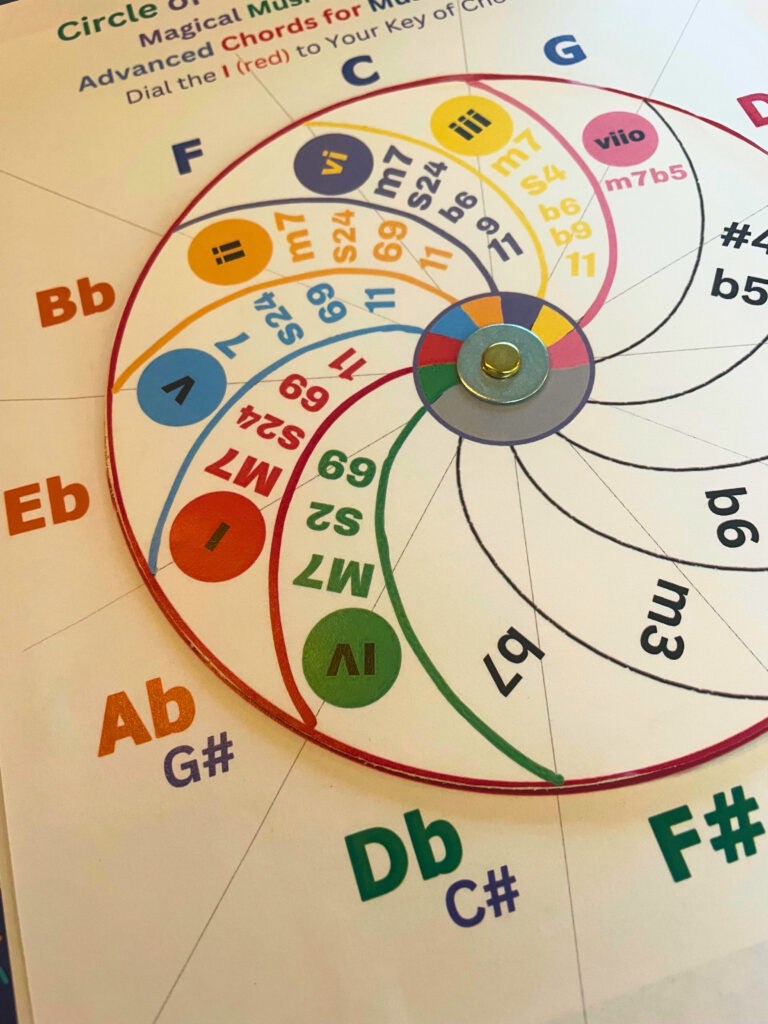
Throughout the video, we encourage experimentation and creativity, emphasizing that music theory shouldn’t be a barrier to exploration. Whether it’s substituting chords, playing with chord extensions, or even making up new progressions, the key is to trust your ears and follow your intuition.
Remember the importance of supporting music education.
In summary, the video offers a delightful blend of education and entertainment, making complex musical concepts accessible to musicians of all levels. So, grab your instrument, unleash your creativity, and embark on a musical journey filled with modal interchange and endless possibilities!
Thanks for watching, and remember to keep the music playing!
This is so cool, why didn’t I think of this before?